
Decus et Tutamen - Inscription on British Coins

Synopsis
This is a Latin inscription on British coins which translates to English as 'An Ornament and a Safeguard', referring the milling or lettering on the edge, and also the monarch.
Most of the inscriptions on British coins have traditionally been in Latin, and we are frequently asked what they mean, and also where they are found.
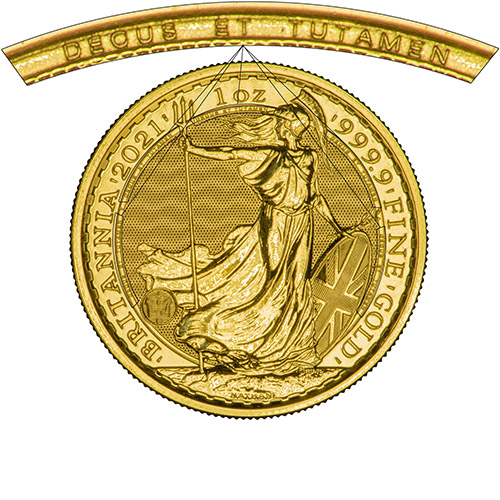
Decus et Tutamen
Decus et Tutamen first appeared on some of the earliest British milled (machine made) coins. It was intended to reassure users that the edge of the coins had not been clipped, but could also be taken to mean that the monarch depicted was also an ornament and a safeguard.
| Inscription | Decus et Tutamen |
| Language | Latin |
| Translation | An ornament and a safeguard |
| Where Used | Early British Milled Coins 1662- |
| Where Used | Edge of 1983 Pound British Design |
| Where Used | Edge of 1987 Pound English Design |
| Where Used | Edge of 1988 Pound Royal Arms Design |
| Where Used | Inner Rim of 2021 Gold Britannia |

Related Blog Articles


This guide and its content is copyright of Chard (1964) Ltd - © Chard (1964) Ltd 2024. All rights reserved. Any redistribution or reproduction of part or all of the contents in any form is prohibited.
We are not financial advisers and we would always recommend that you consult with one prior to making any investment decision.
You can read more about copyright or our advice disclaimer on these links.